

Indigestion in pregnancy can catch you off guard. One minute, you’re enjoying a meal, and the next, you’re dealing with a burning feeling in your chest, an uncomfortable fullness or bloating that just won’t settle.
If this sounds familiar, you’re definitely not the only one feeling this way. Indigestion and heartburn are very common digestive symptoms during pregnancy, affecting many people at some point.
While it can be uncomfortable, indigestion is usually harmless. Understanding what’s behind it and knowing what may help can make it feel much more manageable.
Let’s take a look at why indigestion happens during pregnancy, what can trigger it, simple ways to ease symptoms and when it may be helpful to speak to a healthcare professional.
Is indigestion normal in pregnancy?
Yes – indigestion during pregnancy is very common. Research suggests that up to 8 in 10 pregnant women experience symptoms like heartburn or acid reflux along the way.
Indigestion symptoms can begin early on, but they often become more noticeable later in pregnancy, particularly from around 27 weeks onwards.
You might notice:
- A burning feeling in your chest (heartburn)
- A bloated or overly full feeling after eating
- Burping or acid reflux
- Feeling sick or generally uncomfortable after meals
Experts often group these symptoms as ‘dyspepsia’, which is the medical term to describe upper digestive discomfort.
While indigestion can affect your comfort, sleep and day-to-day routine, it’s usually not a sign of anything serious. In many cases, symptoms can be managed with simple lifestyle adjustments and often improve after your baby is born.
If symptoms feel persistent or affect your quality of life, a pharmacist, midwife or GP can help you find ways to manage them safely.
What causes indigestion during pregnancy?
Indigestion during pregnancy is usually due to a combination of natural changes happening in your body. These shifts can affect how your digestive system works and can make symptoms like heartburn, bloating and discomfort more likely.
Hormonal changes slow digestion
During pregnancy, your body produces higher levels of progesterone, a hormone that helps support your pregnancy. While it’s doing its important work, it also relaxes smooth muscles throughout your body, including those in your digestive system.
This can mean:
- Food moves more slowly through your stomach
- The valve between your stomach and oesophagus relaxes
- Stomach acid can travel upwards more easily
That relaxation of the valve between your stomach and oesophagus is one of the main reasons heartburn or acid reflux can happen during pregnancy.
Your growing baby puts pressure on your stomach
As your baby grows, your uterus expands and takes up more space in your abdomen, putting extra pressure on your stomach.
You may notice symptoms becoming more frequent or intense as pregnancy progresses.
Digestion naturally slows down
Pregnancy can also slow your overall digestion. Food may stay in your stomach for longer, which can lead to symptoms like bloating and a heavy or uncomfortable feeling after meals.
Common indigestion triggers to be aware of
While indigestion in pregnancy mostly comes from changes happening in your body, certain foods and habits can sometimes make symptoms worse.
Everyone is different, so it may help to pay attention to what seems to trigger your symptoms and adjust where it feels manageable.
Common triggers include:
- Rich, fatty or spicy foods
- Acidic foods (like tomatoes and citrus fruits)
- Drinks containing caffeine, such as tea, coffee or cola
- Large meals (feeling very full can put extra pressure on your stomach)
- Lying down soon after eating
You don’t need to avoid everything on this list. Even small, realistic adjustments can make a difference.
Eating habits that may help reduce indigestion
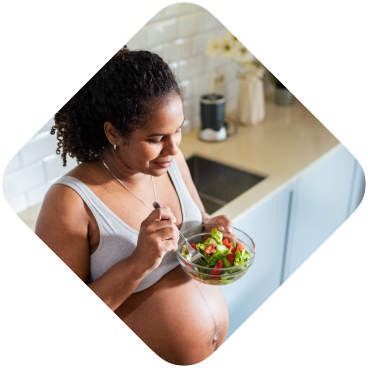
Simple tweaks to how and when you eat may help ease indigestion in pregnancy. For many people, these simple adjustments are enough to make symptoms feel more manageable.
You might find it helpful to:
- Eat smaller meals more often: Eating little and often may help prevent your stomach from becoming too full, reducing pressure and discomfort.
- Avoid eating late in the evening: Try to leave at least three hours between your last meal and bedtime.
- Sit upright during and after meals: Staying upright can help take the pressure off your stomach.
- Take your time when eating: Eating slowly and chewing your food thoroughly may support digestion and help you feel more comfortable after meals.
- Keep track of your triggers: If certain foods or drinks seem to make symptoms worse, keeping a simple food diary may help you spot patterns and make adjustments that work for you.
- Choose drinks that feel gentle on your stomach: Limiting caffeine and fizzy drinks may reduce bloating or reflux. Water or other non-caffeinated options may feel easier on the stomach.
- Aim for a balanced, fibre-rich diet: Including whole grains, fruit and vegetables supports a healthy bowel. Pairing fibre with plenty of fluids is also important to help keep things moving smoothly.
There’s no need to overhaul your diet all at once. Start with one or two small adjustments and see what works best for your body.
Lifestyle and sleep tips
Alongside changes to your eating habits, simple lifestyle adjustments may help reduce indigestion, especially later in pregnancy:
- Adjust your sleeping position: Propping your head and shoulders up in bed can help prevent stomach acid from rising while you sleep.
- Wear loose, comfortable clothing: Try to avoid wearing clothes that are tight around your waist, as this can increase pressure on your stomach.
- Stay active: Light, regular movement can support digestion and overall comfort.
Making a few simple adjustments to your daily routine may help you feel more comfortable and in control of your symptoms.
When to speak to a healthcare professional
Indigestion during pregnancy is common and usually nothing to worry about. But if your symptoms aren’t improving and changes to your diet and lifestyle aren’t helping, it’s a good idea to reach out to your midwife, GP or a pharmacist. They can help you find ways to manage your symptoms and check if anything else might be contributing to them.
Sometimes, it’s helpful to get medical advice to rule out other causes. Speak to your midwife or GP if you notice:
- Difficulty swallowing
- A hoarse voice or a cough that doesn’t go away
- Unexplained weight loss
- Persistent pain or swelling in your stomach
If you’re taking medication for another condition and think it may be making your symptoms worse, consult your GP before making any changes. Never stop taking prescribed medication unless a healthcare professional advises you to.
What can I take for indigestion during pregnancy?
Rennie Peppermint is suitable for use during pregnancy when taken as directed and when prolonged use of high doses is avoided. It contains antacid ingredients (calcium carbonate and magnesium carbonate), which help to relieve heartburn and indigestion during pregnancy.
Always speak to your pharmacist, midwife or GP before taking any medicine during pregnancy, and always read the label carefully.
Indigestion and heartburn in pregnancy can feel uncomfortable, but they’re not typically linked to any problems with the baby or birth, and tend to resolve themselves after birth.
For most people, the main impact is on comfort, sleep and daily life rather than pregnancy outcomes. Small changes to your meals and routine can often help, but if you’re worried or symptoms aren’t improving, speak to your doctor, midwife or pharmacist.

TIPS & ADVICE
A busy life can be hard on the stomach and anyone can be affected by heartburn, indigestion or trapped wind at some point. But if you often find yourself in discomfort, sometimes just a few simple changes to your lifestyle can really help to ease those uncomfortable symptoms.

Home remedies to naturally relieve heartburn
Suffering from heartburn? Rennie shares some tips on natural methods and home remedies for heartburn relief that can help to ease your symptoms.

Foods to avoid if you suffer from acid reflux
Sadly, acid reflux can be caused by one of life's greatest pleasures; food. Rennie examines how changes in your diet can make all the difference and which foods are the most common causes.

Chest pain: is it heartburn or a heart condition?
Do you have an unknown pain in your chest? Find out how you can recognise different types of chest pain and identify heartburn, indigestion, & gastro-oesophageal reflux disease (GERD).
